1841 to the present
The history of Darlington Bank Top
Darlington’s railway fame began before Bank Top, but the station became one of the great stopping places on Britain’s East Coast route. Its story is one of repeated expansion rather than reinvention.
The station that greets passengers today is the third main building on the Bank Top site. Its long, curved train shed, iron columns and clock tower are not a decorative backdrop: they were designed for a railway already becoming faster, busier and more national in reach.
Seven turning points
A station shaped by growth
- 1825
The railway age begins in Darlington
The Stockton & Darlington Railway opened on 27 September. It did not use today’s Bank Top station, but it fixed Darlington’s place at the beginning of the public railway story.
- 1841
The first station at Bank Top
The Great North of England Railway reached Darlington from York. Its original Bank Top station was a much smaller building than the one passengers know today.
- 1860
A first major rebuild
Rapidly growing main-line traffic made the early station inadequate. Bank Top was rebuilt, but within a generation the railway had outgrown it again.
- 1887
The great Victorian station opens
The present station opened on 1 July. Architect William Bell created the imposing red-brick composition, clock tower and vast iron-and-glass train shed that still define Bank Top.
- 1977
National recognition
The main station building was added to the National Heritage List for England at Grade II*, recognising its more-than-special architectural and historic importance.
- 1991
Electric trains on the East Coast Main Line
Electrification transformed the main-line service through Darlington, placing the station on the modern electric route between London, North East England and Scotland.
- 2025–26
A new eastern gateway
Railway 200 coincided with the station’s largest transformation for generations. New platforms and an eastern concourse opened to passengers on 17 May 2026.
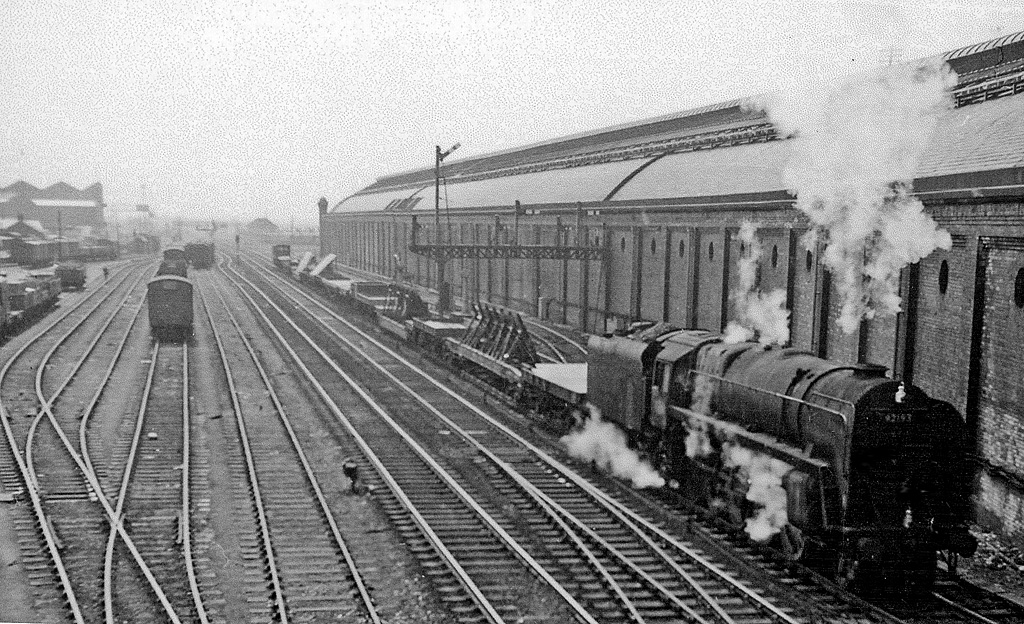
The working railway
Bank Top was built to move, not merely to impress
The train shed’s broad spans and central island platform handled express passengers, local connections, parcels and heavy freight. Some routes have vanished, but Darlington remains an interchange between the East Coast Main Line and Tees Valley services.